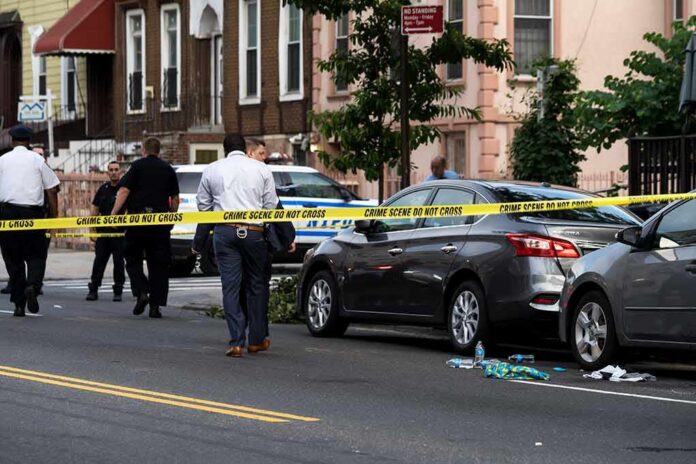
New York City’s own police data show major crimes fell in 2024, and a rally in the city is using those gains to declare a public safety win.
Story Snapshot
- New York Police Department reported a 2.9% drop in overall index crime in 2024.
- Monthly police releases showed steady declines across much of 2024, including sharp August gains.
- National outlets also noted year-over-year declines in New York City crime.
- The rally message centers on official numbers, not partisan claims of cause.
What The Rally Is Celebrating
Event speakers pointed to the New York Police Department’s annual report for 2024, which showed overall index crime decreased by 2.9 percent. The department listed 377 murders in 2024, which was 14 fewer than in 2023. The report also showed robberies down 2.3 percent, burglaries down 5.7 percent, grand larceny down 5 percent, and car theft down 10.3 percent. Local coverage echoed those trends and treated the drop as real and meaningful.
Organizers also cited monthly releases that tracked the slide during 2024. In May, the department said overall index crime fell 2.4 percent year over year. In July, it reported a seventh straight month of reductions, with a 4.2 percent drop. In August, it reported a 6.4 percent citywide decrease and a 53.1 percent fall in murders for that month. Those snapshots supported the rally’s claim that progress built across the year.
How The Data Fit The Bigger Picture
City police statistics are part of a wider trend. National reporting early in 2024 found that violent crime was down year over year in several large cities, including New York. That broader context helps explain why a New York rally would highlight local figures alongside national gains. The point is not who gets credit, but that the numbers show fewer serious offenses than the year before in the nation’s largest city.
Still, crime is not one number. Some categories improved while others rose in certain months, which can shape how people feel on their block. The New York Police Department’s monthly tables sometimes showed increases in specific offenses even when the total fell. That mix is why the debate often turns on which measure and time frame someone picks. The rally centered on the full-year index set that many officials use to gauge safety.
Why Left, Right, And The Middle Care
Families, shop owners, and commuters want safe streets without spin. Conservatives worry about policies they see as soft on crime and the cost of living. Liberals worry about fairness, force, and gaps between rich and poor. Both sides share a deeper fear that powerful insiders protect their own and dodge hard fixes. When official police data show crime easing, many welcome relief, but they also demand transparent methods and steady follow-through from leaders.
"God bless you for everything you do."
New York Gubernatorial candidate Bruce Blakeman thanks President Trump for closing the border and cracking down on fentanyl and crime during a rally in Nassau County. pic.twitter.com/mzTUXu814J
— NEWSMAX (@NEWSMAX) August 14, 2026
For New Yorkers, fewer robberies, burglaries, and car thefts are practical wins. They can mean lower insurance claims, less lost income, and calmer commutes. For police, prosecutors, and courts, the trend offers a chance to double down on what worked and adjust what did not. For elected leaders, it is a reminder to report facts clearly, separate credit from data, and resist the urge to twist metrics. Trust grows when success is measured the same way in good times and bad.
Sources:
kotaradio.com, ny1.com, nyc.gov