As Taiwan fires U.S. rockets toward the Taiwan Strait for the first time from its west coast, many Americans see yet another warning that powerful governments keep playing military chess while ordinary people carry the risk and the bill.
Story Snapshot
- Taiwan fired U.S.-made HIMARS rockets from its west coast toward the Taiwan Strait in a first-of-its-kind public drill.
- The exercise tested rapid “shoot-and-scoot” strike tactics meant to slow a Chinese attack, but 4 of 36 planned rockets failed.
- Officials call the drill a key step in modern defense, while critics see expensive theater with little proof it truly deters war.
- Limited transparency and heavy media spin on all sides deepen public fears that elites are escalating risks without real accountability.
What Taiwan Actually Did With U.S. HIMARS Rockets
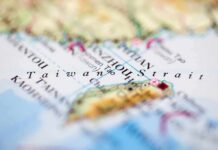
Taiwan’s army carried out a live-fire drill using the U.S.-supplied High Mobility Artillery Rocket System, or HIMARS, along the island’s west coast near the mouth of the Dajia River in Taichung.[1] Military leaders said the exercise simulated long-range precision strikes to support forces in northern Taiwan if China tried to invade.[1] This was the first time HIMARS were publicly fired off Taiwan’s west coast into waters about 9 kilometers offshore, facing the Taiwan Strait.[1][2] Officials framed it as a clear message to Beijing.
The drill used six HIMARS launchers, three on each side of the Dajia River, each loaded with six reduced-range training rockets.[1] Soldiers fired in three waves, with each launcher supposed to shoot two rockets per wave.[1] That firing plan added up to 36 rockets in total and was designed to test how quickly units could move into place, launch, and then pull back before an enemy could target them.[1][2] Taiwan’s army said the drill was part of a wider artillery exercise that also involved traditional howitzers and self-propelled guns.[1]
How the Drill Performed — And Where It Fell Short
The army reported that only 32 of the 36 planned rockets actually fired, meaning four failed in some way.[1] A senior officer, Colonel Weng Yi-ming, said two rockets on the river’s north bank failed to ignite and two on the south bank misfired, with the causes still under investigation.[1] Those numbers give critics on all sides a concrete point: the system and crew are not perfect. At the same time, most rockets launched as planned and landed in the designated offshore impact area.[1]
Military officials highlighted the drill as proof of “rapid deployment,” “precision strike,” and “cross-regional reinforcement” capabilities that could disrupt an invading force’s advance.[1] They also stressed the “shoot-and-scoot” tactic, where HIMARS moves quickly after firing to avoid being tracked and destroyed by enemy radar and missiles.[1][2] Yet public reports do not show independent data on accuracy, time to move after firing, or how the system would hold up under real enemy counterattacks.[1][2][5] For citizens who want hard proof, that gap matters.
Why This Matters for Americans Watching From Afar
Many Americans feel stuck in the middle as their government sends advanced weapons overseas while problems at home keep piling up. The HIMARS drill lets Taiwan practice defending itself, but it also ties the United States more tightly into a dangerous standoff between Beijing and Taipei. Washington sells the systems, helps train the crews, and then points to these same exercises as proof it must keep spending huge sums on weapons and overseas commitments instead of focusing on debt, borders, and the shrinking middle class.[5]
The US continues to sell obsolete, redundant and army rejects to Taiwan at inflated prices.
Republic of China Army’s New U.S. HIMARS Rocket Artillery Suffers High Misfire Rate in First Live Fire Drills https://t.co/DK8dm7s9b9
— Desmond Sun (@DesmondSun3) June 12, 2026
People on the right worry this is one more step toward another far-off war that the American working class will pay for in taxes and, if things go wrong, in lives. People on the left see another example of insiders and defense contractors cashing in while basic social needs struggle for funding. Both sides can agree on one thing: powerful elites are making long-term security bets in Asia without giving regular citizens clear information on the risks, costs, or endgame.
Media Spin, Missing Data, And The “Deep State” Feeling
Coverage of the drill shows how fast the story turns into theater. Headlines and videos talk about rockets “fired toward China” and a “warning” to Beijing, playing up fear and drama on all sides.[2][5] Chinese messaging has every reason to mock the exercise as weak or provocative, no matter what actually happened. Taiwanese and Western outlets tend to stress deterrence, even though there is no public data proving that Beijing’s plans changed at all because of this one event.[1][2][5]
The Taiwan military has not released a full after-action report, detailed accuracy scores, or full technical logs for the 32 successful rockets or the four failures.[1][2][5] That lack of transparency is familiar to American readers who have watched their own Pentagon hide details, overpromise on new systems, and then quietly admit problems years later. When big decisions about war and peace depend on secret reports, citizens on both the right and left feel like decisions are being made by a “deep state” they cannot see and cannot hold to account.
What This Drill Reveals About A Changing World
The HIMARS test in Taiwan is one piece of a larger shift in war planning. Countries across the Indo-Pacific are investing in mobile, long-range precision weapons that can move fast, hit hard, and then vanish.[1][5] In theory, that makes it harder for any one power, including China, to bully its neighbors. In practice, it also means more rockets, more missiles, and more chances for a local crisis to spiral out of control before the public even understands what happened.
For Americans of any political view, the deeper question is not whether Taiwan should be able to defend itself. It is whether decisions about U.S. support, spending, and risk are being made in ways that respect the people who fund and fight these policies. Until governments — in Taipei, Washington, and Beijing alike — offer real transparency instead of carefully staged drills and talking points, many citizens will see events like this HIMARS test less as a sign of safety and more as another warning that the system serves itself first.
Sources:
[1] Web – Taiwan Tests HIMARS Missiles on Island’s West Coast
[2] Web – Taiwan conducts first live-fire drill of U.S.-supplied HIMARS
[5] YouTube – Taiwan Conducts HIMARS Live-Fire Exercise Delivered By US In …