
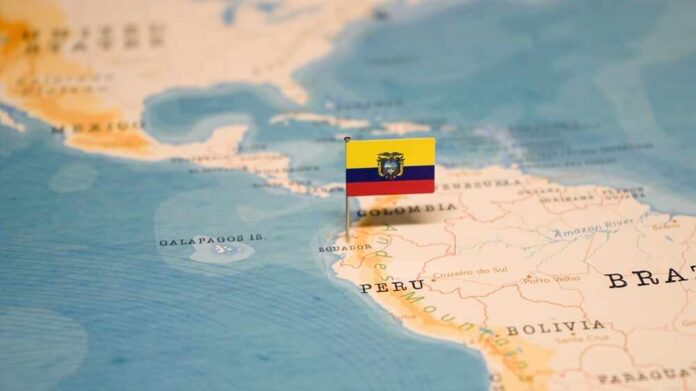
As Colombia heads into a pivotal presidential vote, many ordinary citizens say they are weighing not just which candidate to support, but whether it is safe to leave home and vote at all.
Story Snapshot
- Documented threats and attacks against candidates and local leaders have intensified in the run‑up to Colombia’s May 31 presidential election, feeding public fear about political violence.
- Illegal armed groups exert territorial control in many rural areas, restricting campaign access and voter mobility where the state is weakest.
- Independent observers say concerns about crime, insurgent groups, and government failure to provide security are shaping the campaign’s core narrative.
- Despite these risks, analysts stress that Colombia’s election institutions have repeatedly managed to run national votes under pressure, though often at a high human cost.
Escalating political violence in the election season
Analysts tracking Colombia’s 2026 race warn that political violence remains a live risk for presidential candidates, local leaders, and those who work around them. Recent death threats and prior attacks on candidates and their protection teams are cited as evidence that the danger is not theoretical but present in this electoral cycle. An Atlantic Council issue brief describes “persistent security risks” to political actors as Colombians approach the May 31 vote, underscoring why many citizens describe an atmosphere of anxiety rather than normal democratic competition [1][4].
Election observers highlight that this is not only about isolated incidents against high‑profile figures but about a broader environment that has “deteriorated in recent weeks.” They point to overlapping threats from political violence, illegal armed group activity, and organized disinformation campaigns, which together make it harder for voters to feel confident that they can participate freely. While the data focuses most clearly on risks to candidates and community leaders, the same environment shapes how ordinary Colombians think about traveling to rallies, meetings, and polling places [1].
Territorial control, voter mobility, and fear outside major cities
Security experts emphasize that Colombia’s map of risk is not uniform. The Atlantic Council brief stresses that in many rural and peripheral territories, illegal armed groups exercise effective control over daily life, including the roads people use and the meetings they can attend. According to this assessment, that territorial dominance “constrains campaign access, restricts voter mobility, and increases risk of intimidation in territories with limited state presence,” a pattern that makes clean elections hardest precisely where citizens already feel most abandoned by government [1].
Independent data collected for 2025 helps quantify the scale of this environment. Colombia’s election‑monitoring organization, the Electoral Observation Mission, recorded 415 violent incidents against political, social, and community leaders that year, with the share targeting political leaders rising from 39 percent to 59 percent of all cases. That shift suggests violence is increasingly aimed at the people who organize politics and connect citizens to the ballot, which can chill participation even when voters themselves are not directly threatened at polling stations [1].
What we know—and do not know—about voter‑specific intimidation
Despite the alarming pattern of threats, the available public evidence does not yet show systematic, nationwide targeting of ordinary voters at the polls. The strongest material focuses on candidate protection, attacks on community leaders, and the constraints illegal armed actors place on territory and movement, rather than on documented cases of voters being turned away or directly threatened at voting centers. Analysts acknowledge that this gap reflects limited visibility, especially in remote areas, not an assurance that intimidation is absent [1].
Election‑assessment work by groups such as the International Republican Institute flags “voter access” and “information integrity” as central concerns in this cycle, but the snippet of their report currently available publicly reveals headings rather than detailed incident findings. That means outside observers can see that international monitors consider security and misinformation serious enough to merit dedicated recommendations, yet cannot independently verify how many specific voter complaints they recorded or how those might translate into suppressed turnout in particular municipalities [3].
Polarized politics and a campaign defined by insecurity
The 2026 presidential race itself reflects how deeply security worries have penetrated Colombian politics. A leading analyst outlet, Americas Quarterly, reports that concerns over political violence, rising crime, and the government’s failure to rein in armed insurgent groups rank among the top issues for voters. The contest pits a left‑wing candidate backed by outgoing President Gustavo Petro against conservative rivals, and observers predict a polarized runoff that mirrors the country’s divide over security, inequality, and the role of the state [2][4].
Citizens across the ideological spectrum see a state that struggles—or sometimes refuses—to guarantee basic safety while political and economic elites insist the system is resilient and legitimate. Colombian institutions have indeed run elections under pressure before, and analysts again emphasize their “resilience and ability to conduct elections even under difficult conditions.” But resilience on paper does not erase the fear felt by people in communities where the rule of law arrives late or not at all [1].
Sources:
[1] Web – How Colombia can reduce security threats ahead of its presidential …
[2] Web – In Colombia’s Election, Two Conservatives Fight to Face Cepeda
[3] Web – IRI Pre-Election Assessment Mission to Colombia’s 2026 …
[4] Web – Colombian Election Preview