
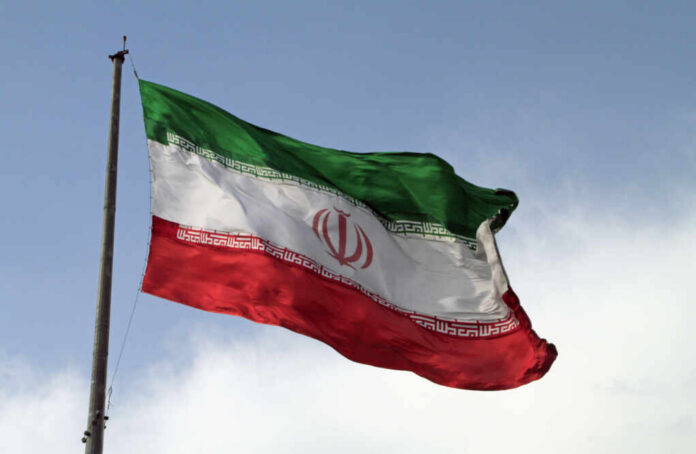
Europe is finally moving to brand Iran’s Revolutionary Guard as terrorists—an overdue step that tests whether the West will treat state-sponsored repression and proxy violence as more than just “diplomacy.”
Quick Take
- The EU Foreign Affairs Council was set to decide on listing Iran’s Islamic Revolutionary Guard Corps (IRGC) as a terrorist organization, a move requiring unanimous approval from all 27 member states.
- France, Italy, Spain, and Luxembourg shifted positions in late January 2026, clearing major political roadblocks to the designation.
- A listing would tighten legal and financial pressure by freezing assets and making IRGC affiliation a criminal offense inside EU jurisdiction.
- EU leaders signaled that diplomatic channels with Iran may remain open even after a terrorist listing—raising questions about enforcement versus engagement.
EU Vote Sets Up a High-Stakes Test of Western Resolve
EU foreign ministers were scheduled to meet in Brussels on January 29, 2026, with the goal of adding Iran’s Islamic Revolutionary Guard Corps to the EU’s official terrorist list. Because EU listings require unanimity, the process has been slow and politically delicate, even as European lawmakers repeatedly urged action. This week’s shift matters because a terrorist listing is not symbolic; it changes criminal exposure, policing authorities, and financial compliance across Europe.
France’s reversal on January 28 became the headline development, because Paris had previously been among the states resisting the move. Italy announced on January 27 that it would no longer oppose the designation, and Spain also announced support on January 28. With those changes, the remaining uncertainty centered on whether any member state would still block consensus, since a single holdout can stop the EU from acting.
Watch:
https://youtu.be/ThFud3VWIYk?si=xI986CJz1hxgCrFN
Why the IRGC Listing Gained Momentum Now
European officials tied the momentum to Iran’s violent crackdown on nationwide protests and the treatment of detainees. European Parliament documentation described accelerated proceedings against protesters, unfair trials, and use of the death penalty—claims that drove renewed pressure for punitive action. Dutch Foreign Minister David van Weel pointed to recent footage from Tehran as crossing “a big line” for EU countries, a sign that public-facing evidence helped shift the political calculus.
The political history also matters. The European Parliament has repeatedly called for the IRGC’s designation through resolutions, but member-state governments hesitated for years because of diplomatic and legal considerations. The United States had already designated the IRGC as a Foreign Terrorist Organization, and other allies such as Canada and Australia have also taken similar steps. This EU move would align Europe more tightly with that existing Western posture and reduce gaps the IRGC could exploit.
What a Terror Designation Would Actually Do Inside Europe
A terrorist listing carries concrete legal force. Expert commentary highlighted that a designation would make it a criminal offense to belong to the IRGC within EU jurisdiction. That shift expands the tools available to law enforcement and prosecutors, including the ability to pursue networks suspected of supporting IRGC-linked activity. The measure also triggers asset freezes and stricter financial scrutiny, pressuring institutions to identify and block transactions tied to sanctioned individuals and entities.
The IRGC’s role outside Iran is central to the case European institutions have cited. European Parliament materials describe the IRGC as deeply involved in repression at home and in supporting armed proxies abroad, including Hezbollah in Lebanon, the Houthis in Yemen, Hamas in Gaza, and Shia militias in Iraq.
The Diplomatic “Door Open” Problem: Listing vs. Leverage
EU foreign policy chief Kaja Kallas indicated that diplomatic channels could remain open even after listing the IRGC. That approach reflects Europe’s long-running habit of trying to balance pressure with engagement. The facts in the public reporting show the tension: the EU is preparing to label a regime-linked military-security organization as terrorist, while simultaneously signaling continued contact with the government that empowers it.
From a conservative perspective focused on results, the credibility of the policy will be measured by enforcement, not announcements. Asset freezes and criminal prohibitions only bite if governments treat violations as serious and if financial institutions are compelled to perform real due diligence.
Kallas Says EU Expected to Put #Iran Guards on 'Terrorist List'https://t.co/TXDeF5l0KJ
— Asharq Al-Awsat English (@aawsat_eng) January 29, 2026
The final uncertainty heading into the meeting was whether any remaining member state would publicly withhold support, since unanimity is required. Public reporting indicated Romania had not stated its position as of late January 28. If the EU follows through, the IRGC would be listed alongside groups already on the EU terrorist list, raising the compliance stakes for European governments, companies, and banks—and sending a message that mass repression and proxy warfare have consequences beyond strongly worded statements.
Sources:
EU Set to Add Iran’s Revolutionary Guard to Its Terrorist Organizations List
The critical choice that Europe faces on the IRGC
European Parliament resolution (TA-10-2026-0023_EN)
US, 40 Nations Move to Enforce UN Sanctions on Iran as EU Signals Possible IRGC Terror Designation
Iran International live blog (202601298967)
EU signals continued diplomacy even after Iran’s Revolutionary Guards designation as terrorists