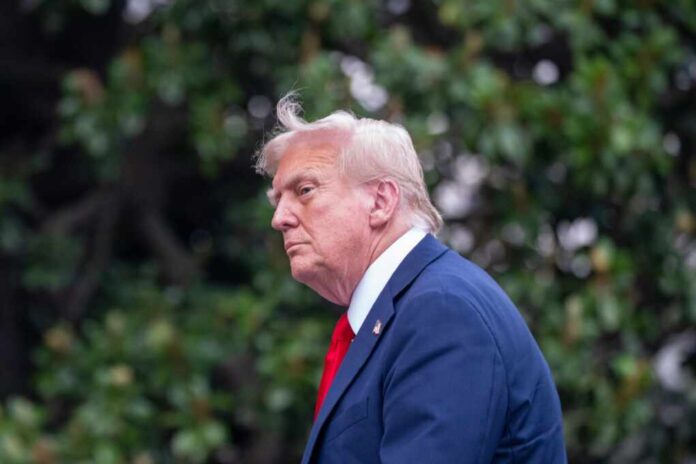
In a move drawing global attention, President Trump has deployed nuclear submarines near Russia, prompting a military collaboration between Russia and China.
Story Highlights
- Trump deploys nuclear submarines in response to Russian threats.
- Putin initiates joint military exercises with China.
- Escalating tensions signal a potential international conflict.
- The Ukraine conflict remains a critical flashpoint.
Trump’s Strategic Military Move
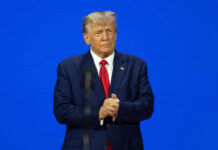
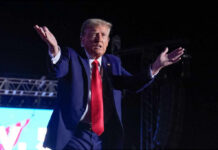
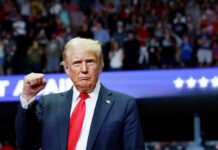
President Donald Trump recently announced the deployment of two nuclear submarines to undisclosed locations in reaction to what he described as “highly provocative statements” by Dmitry Medvedev, Russia’s Deputy Chairman of the Security Council. The move comes amidst increasing tensions over the ongoing Ukraine conflict and the threat of new US sanctions against Russia. Trump’s decision emphasizes America’s resolve to counter perceived threats and maintain a strong military posture.
JUST IN: Trump Orders U.S. Nuclear Subs Deployed After Medvedev’s Threatening Rhetoric https://t.co/knHOKsKPNN
— Tuck | Political Roastmaster (@realTuckFrumper) August 1, 2025
This deployment follows Trump’s ultimatum to Russia, demanding a ceasefire in Ukraine within ten days or face severe sanctions. The US administration’s actions underscore a commitment to defending international norms and deterring aggression from adversarial powers. However, the positioning of nuclear submarines marks a significant escalation in military posturing, raising concerns about the potential for miscalculation and unintended conflict.
Watch: Trump deploys nuclear submarines after “provocative comments” by former Russian President | BBC News
Russia and China’s Military Alliance
In a swift response to the US’s military maneuvers, Russian President Vladimir Putin announced the commencement of joint military exercises with China. While details about the timing and scope of these exercises remain scarce, this collaboration signals a strengthening alliance between Moscow and Beijing. The exercises are a clear demonstration of their unified front against Western pressure and a bid to counterbalance US influence in global affairs.
The Russian-Chinese military partnership has been growing over recent years, with both nations participating in numerous joint exercises since 2018. This latest development reflects their strategic alignment in the face of rising tensions with the United States. The potential for a broader conflict involving nuclear powers has heightened global concerns, emphasizing the need for diplomatic efforts to de-escalate the situation.
Implications of Escalating Tensions
The deployment of nuclear submarines and the subsequent Russian-Chinese military exercises have significant short-term and long-term implications. In the immediate term, there is a heightened risk of military miscalculation and increased nuclear alert levels. The deterioration of US-Russia and US-China relations could lead to further geopolitical instability, affecting global markets and economies.
In the long term, these developments may contribute to a new arms race and solidify the Russia-China military alliance. The weakening of global arms control regimes could result in increased defense spending and military mobilization, further straining international relations. The situation in Ukraine remains precarious, with the potential for the conflict to spill over into neighboring regions, posing a threat to European security.
Expert Opinions and Analysis
Experts have expressed concerns over the risks associated with nuclear signaling and the possibility of unintended escalation. Professor Paul Morcraft from BBC warns that Trump’s actions could exacerbate the “balance of terror,” highlighting the strategic and tactical nuclear implications. The Nuclear Threat Initiative has also voiced apprehension, emphasizing the dangers of public nuclear threats and the erosion of established crisis management protocols.
The current geopolitical dynamics necessitate careful navigation to prevent further escalation and to safeguard global peace and stability. As the situation unfolds, it is crucial for world leaders to engage in dialogue and explore diplomatic avenues to resolve tensions and avert a potential crisis.
Sources:
ABC News
Nuclear Threat Initiative