California Democrats just fast-tracked another $90 million to Planned Parenthood—and the governor’s office turned the bill-signing into a public scolding match with the press.
Story Snapshot
- Gov. Gavin Newsom signed Senate Bill 106 on Feb. 11, 2026, authorizing $90 million in “emergency” state funding for Planned Parenthood.
- California’s First Partner, Jennifer Siebel Newsom, interrupted the press exchange to rebuke reporters for asking what she called off-topic questions, invoking a “war on women” narrative.
- The funding move follows President Trump’s 2025 One Big Beautiful Bill Act, which blocked federal Medicaid funding from going to Planned Parenthood.
- Republicans criticized Sacramento’s spending priorities, pointing to rural hospitals and broader access-to-care strains across the state.
Bill Signing Turns Into a Message Discipline Moment
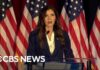
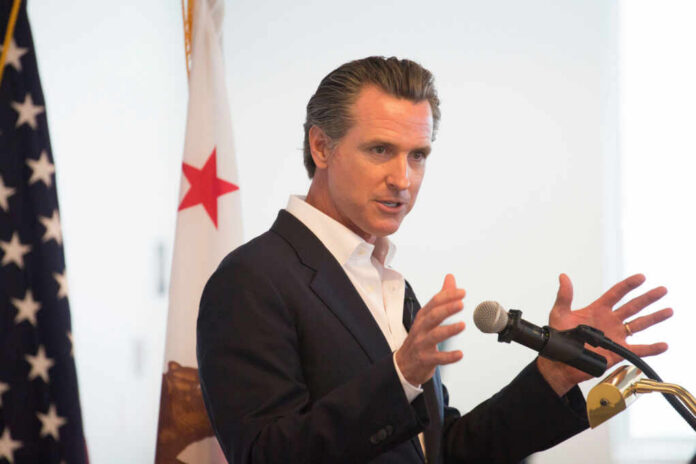
Gov. Gavin Newsom signed SB 106 near the California Capitol in Sacramento on Wednesday, Feb. 11, 2026, approving $90 million intended to stabilize Planned Parenthood clinics after federal Medicaid dollars were cut off. During the press conference, California First Partner Jennifer Siebel Newsom stepped to the podium and sharply criticized reporters’ questions, arguing they weren’t centered on women’s health and calling the national climate a “war on women.”
Jennifer Siebel Newsom’s remarks became a central part of the public narrative, partly because the confrontation happened during an official state event and was recorded on video. Her comments also widened the focus from a narrow budget and health-policy debate to a broader political conflict with the Trump administration. For voters already wary of political stagecraft, the exchange reinforced how California’s leadership often treats scrutiny itself as the problem, rather than answering tough questions directly.
Why California Says It Needs “Emergency” Funding Now
State officials argue the new appropriation is necessary because a large share of Planned Parenthood’s California activity previously relied on Medi-Cal reimbursements tied to federal Medicaid funding. Reporting on the measure says more than 80% of nearly 1.3 million annual patient visits were reimbursed through Medi-Cal, and that funding losses put more than 100 health centers at risk. Planned Parenthood clinics provide abortions as well as services like birth control, cancer screenings, and STI testing.
California’s $90 million is not its first response. In fall 2025, the state approved roughly $145 million to offset earlier impacts, bringing the post-cut total to about $235 million. In statements around the signing, Newsom framed the federal change as an attack on health access and emphasized that the cuts affected screenings and other services, not only abortion. Democratic legislative leaders similarly cast the spending as a statewide health measure rather than a narrow political fight.
Federal-State Collision Over Medicaid Policy and Governance
The immediate trigger for California’s funding push is President Trump’s 2025 One Big Beautiful Bill Act, described in coverage as blocking federal Medicaid funding from going to Planned Parenthood. Supporters of the federal move see it as aligning taxpayer-backed programs with pro-life priorities and limiting public dollars to organizations tied to abortion. California leaders, by contrast, are trying to replace the federal stream with state money—effectively creating a state-funded backstop to override the practical impact.
This kind of federal-state collision matters beyond the abortion debate because it raises a core governance question: when Washington changes eligibility for federal dollars, should states simply write bigger checks to keep the same institutions afloat? For conservatives who prioritize limited government and fiscal restraint, the California model looks like a familiar pattern—Sacramento spends first, then frames any pushback as hostility to women or healthcare. The available reporting does not provide an independent cost-benefit analysis of the long-term sustainability.
Spending Priorities: Planned Parenthood vs. Rural Hospital Access
Republican lawmakers did not control the outcome in California’s Democrat-dominated legislature, but they did use the debate to spotlight tradeoffs. Sen. Megan Dahle argued that rural communities face shrinking hospital services and closures that force long drives for treatment, and she urged lawmakers to prioritize stability for those regions. That critique doesn’t settle the Planned Parenthood question, but it underscores a budgeting reality: every “emergency” appropriation signals what Sacramento will protect first when resources are tight.
For now, SB 106 is law, and the money is intended to keep clinics operating and patients served while California battles federal policy in public and in messaging. What remains unclear from the currently available reporting is how long the state can keep substituting for federal Medicaid dollars without squeezing other health priorities, especially in underserved areas. The episode also showed how quickly California’s political class shifts from policy explanation to media confrontation when questions get uncomfortable.
Sources:
California’s Planned Parenthood clinics will get a $90 million boost from the state
Gov. Gavin Newsom approves $90 million for Planned Parenthood
California’s Planned Parenthood clinics will get a $90 million boost from the state
Gavin Newsom’s wife scolds reporters at Planned Parenthood funding bill signing ceremony