Iran’s regime is scrambling to pick a new supreme leader under fire—showing how fragile a theocratic system looks when power hinges on one man.
Quick Take
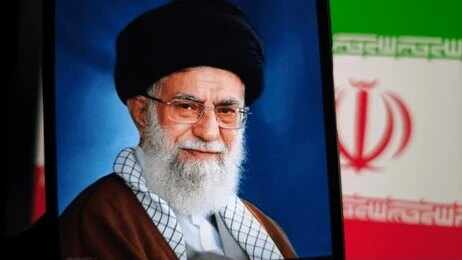
- Iran’s Assembly of Experts is racing to name a successor after Supreme Leader Ali Khamenei was assassinated on Feb. 28, 2026, during the widening Iran war.
- An interim leadership council took over under Iran’s constitution, but war disruptions and internal pressure are slowing a public announcement.
- Reported front-runners include Mojtaba Khamenei and hardline cleric Alireza Arafi, with the IRGC described as pushing for Mojtaba.
- Foreign strikes and rhetoric—including claims of outside influence—are adding uncertainty to an already rare leadership transition.
Assassination Forces a Wartime Succession Process
Iran’s leadership vacuum opened on Feb. 28, 2026, after Supreme Leader Ali Khamenei was assassinated amid Israeli-United States airstrikes tied to the 2026 Iran war. Iran’s constitution lays out a continuity plan, and the system moved quickly to avoid a visible breakdown. The result is a rushed, high-stakes transition that is only the second supreme leader change since the Islamic Republic was established in 1979.
Iran’s Assembly of Experts—an 88-member clerical body—holds the formal responsibility to choose the next supreme leader. The Assembly met online on March 3 as the war environment disrupted normal operations. A public announcement was still pending as of March 8, even though multiple clerics reportedly signaled that a decision had effectively been made behind the scenes.
Interim Leadership Council Highlights Regime-First Governance
Iran’s constitution provides for an interim leadership council to carry out the supreme leader’s duties during a vacancy, and that mechanism activated quickly after Khamenei’s death. A “group of three” that includes President Masoud Pezeshkian, Chief Justice Gholam-Hossein Mohseni-Eje’i, and Alireza Arafi. Early reporting included a larger list, but later accounts clarified the smaller group, underscoring how opaque succession becomes in crisis.
That interim setup is designed for regime continuity, not public accountability. For American readers, it’s a reminder that Iran’s system concentrates ultimate power in an unelected religious office with sweeping control over military, security, judiciary, and nuclear policy. In practical terms, the interim council can keep state decisions moving while the Assembly negotiates the next leader—reducing immediate instability, but also keeping real authority far from ordinary citizens.
Hardliners, the IRGC, and a Potential “Dynastic” Outcome
The top names reflect Iran’s hardline power structure. Mojtaba Khamenei—son of the late supreme leader—appears repeatedly as a front-runner, with the IRGC described as pressuring for his selection. Alireza Arafi, a senior cleric with institutional roles tied to Iran’s governing bodies, is also identified as a leading contender. Public reporting also notes that the finalist list has been kept tightly held.
From a conservative American perspective, the important takeaway is what the system rewards: loyalty, coercive capacity, and continuity. The Assembly’s membership was shaped by heavy vetting and a hardliner tilt, particularly after the 2024 election cycle. If Mojtaba is selected, it would look less like a transparent religious appointment and more like an entrenched ruling class preserving power—especially under wartime conditions.
War Disruptions and External Pressure Raise the Stakes
The transition is unfolding with Iran’s leadership under direct threat. The disruptions ranging from remote meetings to strikes that reportedly hit a key Assembly building in Qom. Those conditions create urgency to project strength and avoid a prolonged vacuum. Yet the same danger can slow public steps, because announcing a new leader during active conflict may create new targeting and internal security risks.
Claims about external influence have also surfaced, including U.S. rhetoric and assertions about choosing or shaping Iran’s next leader. The strongest, verifiable point from the sources provided is that outside military pressure and wartime realities are impacting the pace and secrecy of the succession process. What remains unclear is the precise identity of the final candidates and the internal vote dynamics.
What This Means for U.S. Interests Under President Trump
For the United States, the key issue is capability and intent: Iran’s next supreme leader will shape nuclear policy, military decisions, and the regime’s approach to the region. A reformist shift is unlikely given the hardline-dominant institutions and IRGC influence. In other words, even if faces change, the structure pushing confrontation, proxy activity, and centralized control may remain the same.
For Americans who value limited government and accountable leadership, Iran’s succession scramble is also a case study in what happens when a system concentrates power beyond democratic checks. The U.S. response will hinge on confirmed facts after the formal announcement. Until then, the biggest verified reality is uncertainty: a wartime transition, competing hardline centers of gravity, and a regime determined to survive first and explain later.
Sources:
Iran Supreme Leader Succession: Khamenei, Mojtaba, Arafi
How succession works in Iran and who could be the country’s next supreme leader
After Khamenei, Iran enters its most uncertain transition since 1979