A new international initiative, the ‘Board of Peace,’ chaired by President Trump, promises to work ‘in conjunction’ with the UN, drawing both praise and skepticism.
Story Highlights
- President Trump announces the Board of Peace at Davos, emphasizing collaboration with the UN.
- The Board aims to oversee Gaza reconstruction and expand to other global conflicts.
- Trump’s leadership promises efficiency but raises concerns over unilateral authority.
- Critics question the Board’s structure and potential overlap with UN functions.
Trump Introduces the Board of Peace
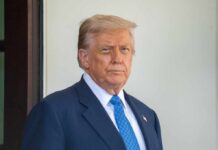
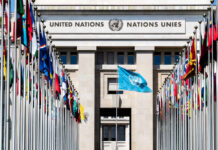
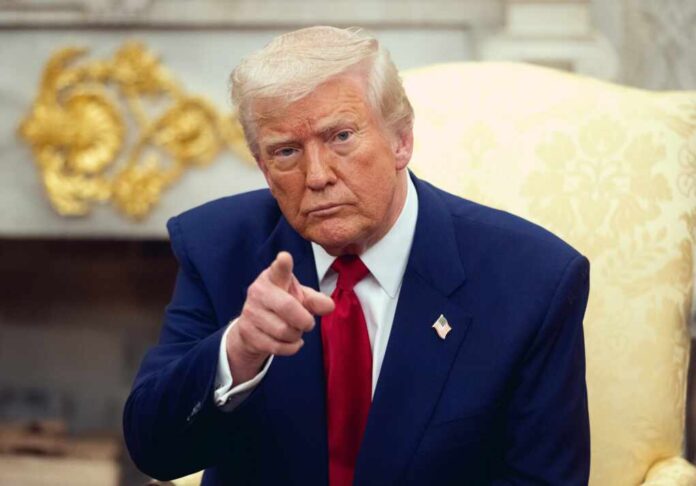
On January 22, 2026, at the World Economic Forum in Davos, President Donald Trump announced the formation of the ‘Board of Peace.’ This new international body is set to oversee Gaza’s reconstruction and promote stability in conflict zones while working ‘in conjunction’ with the United Nations. Despite Trump’s history of criticizing the UN, he emphasized the potential benefits of this collaboration, drawing attention to the board’s pragmatic and action-oriented approach.
The announcement was met with mixed reactions, highlighting Trump’s unique leadership style that combines direct action with multilateral engagement. While some applaud the initiative’s focus on efficiency and results, others express concerns over the board’s private charter and Trump’s unilateral authority. The board’s membership involves potential $1 billion fees for permanent seats, raising questions about its accessibility and transparency.
Background and Context
The Board of Peace stems from Trump’s September 2025 proposal during the Israel-Hamas ceasefire, integrated into his 20-point Comprehensive Plan to End the Gaza Conflict. This plan, endorsed by the UN Security Council, includes demilitarization, reconstruction, and governance overhaul. The announcement at Davos aligns with Trump’s ‘America First’ foreign policy, emphasizing swift action over consensus, building on successful precedents like the Abraham Accords.
Key stakeholders include prominent figures such as Secretary of State Marco Rubio and Jared Kushner, who are part of the executive committee. The board’s initial focus on Gaza is part of a broader strategy to extend its influence to other global conflicts, positioning the U.S. at the forefront of international peace efforts. However, Trump’s critics argue that this move could undermine the traditional role of the UN in global governance.
Current Developments and Implications
With the charter signed, the Board of Peace is now operational, with its first meeting held on the sidelines of the Davos forum. The Rafah crossing is set to reopen, and aid is flowing into Gaza, with no reports of starvation. The board’s short-term goals focus on accelerating Gaza’s demilitarization and reconstruction, while long-term plans include potential expansion to other conflicts and regions.
'Once this board is completely formed, it can do anything it wants to do.'
Donald Trump says the Board of Peace, coupled with the United Nations, could be 'something unique for the world'. pic.twitter.com/QYirKFul9u
— GB News (@GBNEWS) January 22, 2026
The board’s establishment has significant economic, social, and political implications. Economically, it mobilizes resources for Gaza’s prosperity. Socially, it aims to stabilize the region, reducing violence and starvation. Politically, it challenges the UN’s dominance in international peace efforts, promoting a U.S.-centric model that may alienate traditional allies. As the board navigates its early stages, the world watches closely to see if it can deliver on its promises of effective peacebuilding and governance.
Sources:
White House: Statement on President Trump’s Comprehensive Plan to End the Gaza Conflict
Wikipedia: Board of Peace
Times of Israel: Live Blog January 22, 2026
CBS News: Trump Board of Peace in Davos
TIME: Trump Gaza Board of Peace Members at Davos