

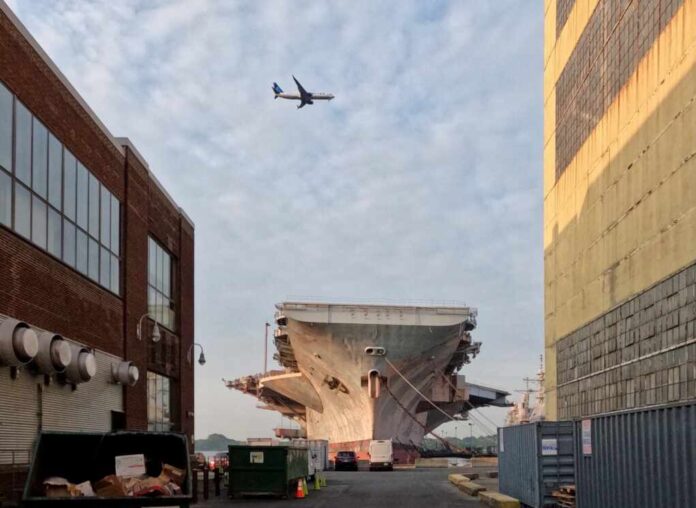
A Pentagon decision accelerates the delivery of USS John F. Kennedy, sparking debate over defense priorities.
Story Highlights
- USS John F. Kennedy’s delivery is fast-tracked to March 2027.
- USS Gerald R. Ford sees its first combat deployment off Venezuela.
- The Pentagon increases pressure on Newport News Shipbuilding to meet deadlines.
- Defense Secretary Pete Hegseth warns shipyard executives that jobs are at risk.
USS Gerald R. Ford’s Combat Deployment
In early January 2026, the USS Gerald R. Ford made history by engaging in its first combat mission during Operation Absolute Resolve off the coast of Venezuela. The deployment provided critical intelligence, surveillance, and reconnaissance (ISR) support, as well as electronic warfare capabilities. This marked a milestone for the Ford-class carriers, which have faced numerous delays and technical challenges over the years. The successful deployment has validated the ship’s advanced technologies, prompting further operational use.
Navy Fast Tracks Build of USS Kennedy 2nd Ford-Class Aircraft Carrier as USS Ford Enters Combathttps://t.co/N9y1pGqKug
— Harry Kazianis (@GrecianFormula) January 10, 2026
Accelerated Delivery of USS John F. Kennedy
Following the combat success of the USS Gerald R. Ford, the Department of Defense announced an expedited timeline for the second Ford-class carrier, the USS John F. Kennedy. Originally scheduled for delivery in July 2025, the timeline had already been extended to March 2027 due to technical and scheduling setbacks. The Pentagon’s decision to fast-track its delivery underlines a strategic shift toward enhancing naval capabilities amid increasing global tensions.
The urgency of the delivery is underscored by the public statements from Defense Secretary Pete Hegseth, who visited Newport News Shipbuilding in Virginia. He emphasized that further delays would not be tolerated and warned that leadership positions at the shipyard were at risk should they fail to meet the new deadline. This direct approach reflects the administration’s broader defense strategy, which seeks to hold contractors accountable for performance and productivity.
Implications for the Defense Industry
The decision to accelerate the USS John F. Kennedy’s delivery has significant implications for the U.S. defense industry. Newport News Shipbuilding, the sole builder of nuclear-powered carriers in the United States, now faces increased pressure to overcome workforce shortages and supply chain bottlenecks. The challenge is compounded by the demand for increased submarine production in collaboration with General Dynamics Electric Boat, highlighting the strain on the nation’s industrial base.
Beyond the shipyard, this acceleration signals a broader policy initiative by the Trump administration to scrutinize defense contractors, ensuring that taxpayer dollars are spent effectively. The administration’s focus on enhancing naval capabilities aligns with its commitment to maintaining U.S. military superiority, particularly in light of growing competition from China and commitments under the AUKUS pact.
Sources:
Navy Fast Tracks Build of USS Kennedy 2nd Ford-Class Aircraft Carrier as USS Ford Enters Combat
U.S. Navy Speeds Up Construction of USS Kennedy 2nd Ford-Class Aircraft Carrier as USS Ford Enters Combat
Ford-Class Troubles Deepen: Ongoing Tech Failures Delay Second Supercarrier by Two Years
U.S. Accelerates Construction of USS Kennedy 2nd Ford-Class Aircraft Carrier as USS Ford Enters Combat