

A year after a preventable mid-air collision killed 67 people over the Potomac, grieving families are demanding that Washington finally stop ignoring safety warnings that were already on the books.
Story Snapshot
- Families held a first-anniversary memorial in Washington, D.C., for the victims of the Jan. 29, 2025 collision near Reagan National Airport.
- The crash involved American Airlines Flight 5342 (a PSA Airlines-operated CRJ700) and a U.S. Army UH-60 Black Hawk on a priority transport mission.
- NTSB testimony described “years of ignored warnings and near-misses,” calling the collision “100% preventable,” with multiple failures rather than one single cause.
- The FAA restricted certain helicopter routes near the airport after the crash, while lawsuits against the airline, the Army, and the federal government remain ongoing.
One Year Later, Families Keep the Pressure on Washington
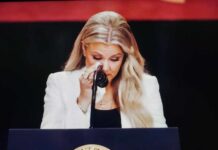
Families and friends of the 67 victims gathered January 28, 2026, at the Daughters of the American Revolution Constitution Hall in Washington, D.C., marking one year since the mid-air collision near Ronald Reagan Washington National Airport. The ceremony blended mourning with a pointed message: prevent the next tragedy. Speakers included relatives, public officials, and advocates, while first responders were honored for recovery work in freezing water. A montage of photos and videos underscored how broad the loss was—children, professionals, and members of the skating community.
Families’ calls for reform intensified because the memorial came one day after emotional National Transportation Safety Board testimony. Some relatives attended that hearing and reportedly struggled as investigators played an animation reconstructing the final moments. The demand from families has centered on practical, measurable changes: better technology to prevent collisions, improved tracking and location capabilities after crashes, and enforceable accountability when agencies and operators fail to act on repeated warnings in busy airspace.
Watch:
What Happened in the Final Minutes Over the Potomac
The collision occurred at night on January 29, 2025, in tightly managed airspace near Washington. A controller advised the Black Hawk crew about an incoming CRJ700 reported around 1,200 feet south of the Woodrow Wilson Memorial Bridge. Moments later, the aircraft collided roughly a half-mile short of Runway 33 near Reagan National, at about 300 feet altitude. Reports describe the helicopter around 278 feet radio altitude and the jet traveling about 128 mph before both crashed into the Potomac River.
Authorities confirmed there were no survivors, and fatalities were declared within hours. American Airlines retired the Flight 5342 number, and the FAA moved quickly to restrict helicopter operations on certain nearby routes, limiting them to essential flights. Those operational changes reflect a hard reality: this crash did not happen in remote airspace. It happened near the nation’s capital, around a major airport, where layered rules, trained professionals, and established procedures are supposed to reduce risk to near zero.
NTSB: “Years of Ignored Warnings” and a Preventable Disaster
NTSB testimony in late January 2026 framed the collision as “100% preventable,” emphasizing that multiple failures stacked up rather than a single, simple cause. Investigators pointed to a record of near-misses and unheeded warnings in the same high-workload environment. That matters because Americans generally accept that accidents happen, but they do not accept bureaucratic drift—where recommendations sit, close calls accumulate, and decision-makers delay until tragedy forces action. The NTSB can recommend, but implementation often depends on agencies, operators, and lawmakers.
Accountability Through Lawsuits and Legislation, Not Just Memorials
Several families have pursued accountability through litigation. Filings described in coverage include lawsuits against PSA Airlines, American Airlines, the U.S. Army, and the federal government, alleging negligence and seeking systemic fixes as well as damages. American and other defendants have signaled legal defenses, including motions to dismiss in ongoing proceedings. The legal fight will take time, but it also compels sworn testimony, document discovery, and clarity about which safety warnings were known, which were acted on, and which were not.
On the policy side, public officials have cited active proposals to mandate improved locator systems and other safety measures, with at least one bill described as nearing passage. Transportation leadership publicly praised families for sustaining pressure, while local leaders discussed memorialization efforts such as a plaque near the Potomac. For citizens who want the government to focus on core responsibilities, this is a clear test: aviation safety is not a culture-war vanity project. It is a basic duty—protecting Americans in the most regulated, technology-driven transportation system in the country.
Families of 67 killed in US aircraft crash remember loved ones and call for reforms https://t.co/oxYZRbCcz1 pic.twitter.com/b3iGXiv7Iy
— The Independent (@Independent) January 29, 2026
Sources:
Families of 67 killed in US aircraft crash remember loved ones and call for reforms
2025 Potomac River mid-air collision
NTSB animation shows lead-up to deadly mid-air crash near DC airport