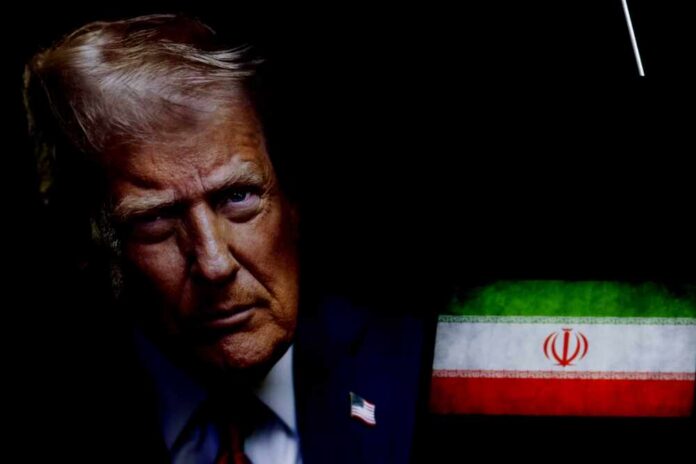
President Trump’s “maximum pressure” Iran strategy just made an unexpected detour—temporarily allowing certain Iranian oil sales to blunt war-driven price spikes that are hammering American families.
Quick Take
- The Treasury Department issued a temporary license allowing purchases of Iranian oil already loaded onto ships by 12:01 a.m. ET on March 20, 2026, running through April 19.
- Officials say the move could help release roughly 140 million barrels of oil already at sea into global markets as the Strait of Hormuz disruption pushes prices higher.
- The authorization is narrow and time-limited, with specified exclusions—including parties tied to North Korea, Cuba, and Russian-occupied Ukraine.
- Treasury Secretary Scott Bessent framed the step as using Iranian barrels “against Tehran,” while maintaining broader financial restrictions.
Treasury’s Temporary License Targets “At-Sea” Iranian Oil
The Trump administration authorized a temporary carve-out to longstanding Iran oil sanctions by issuing a Treasury license covering Iranian crude already loaded onto ships before a strict cutoff: 12:01 a.m. ET on March 20, 2026. The license runs until April 19, a defined window intended to move existing cargoes rather than green-light open-ended trade. The policy also contains exclusions meant to prevent sanctioned jurisdictions and entities from using the authorization as a workaround.
The practical goal is supply, not diplomacy. Administration messaging emphasizes that the oil is already at sea and that the license is designed to increase global availability quickly. That matters because oil markets respond to near-term deliverable barrels, especially during conflict. The White House and Treasury are leaning on the “temporary” and “limited” framing to reduce the perception that the U.S. is easing up on Iran strategically during an active war.
War Pressure in the Strait of Hormuz Is Driving Price Shock
Oil prices surged as traffic slowed through the Strait of Hormuz, a corridor linked to roughly one-fifth of global oil flows. Reporting around the decision described Brent crude reaching about $111 per barrel, with sharp moves tied to the conflict’s escalation and shipping threats. The administration has also pursued other tools to prevent a prolonged energy shock, including Strategic Petroleum Reserve releases and other temporary measures aimed at keeping supply moving when key routes are disrupted.
For a conservative audience that lived through years of inflation and policy-driven energy constraints, the central issue is the kitchen-table hit from spikes in gasoline and diesel. The new license reflects the political reality that wartime unity can fracture when households face sudden cost surges. The administration’s argument is straightforward: stabilizing prices helps preserve public support for the broader strategy, even if the optics of touching Iran-related oil are politically combustible.
Bessent Says the U.S. Can Tap Barrels Without Rewarding Tehran
Treasury Secretary Scott Bessent publicly suggested the move could help release about 140 million barrels—roughly 10 to 14 days of supply—describing it as turning Iran’s own barrels against the regime. The administration also argues Iran’s ability to benefit is constrained by financial restrictions that remain in place, meaning the U.S. can add supply without fully reopening the revenue spigot. That claim is central to the policy’s credibility with sanctions hawks.
Outside experts and critics dispute how cleanly those lines can be drawn in real markets. Axios quoted a sanctions expert describing it as a notable shift—conceding in wartime what was not conceded in peacetime—underscoring the rarity of sanction flexibility involving an active adversary. The factual bottom line is that the license is real, active, and time-bound; what remains uncertain is how much of the price relief shows up quickly at the pump, and how much money Iran indirectly captures through intermediaries.
China, Congress, and the Risk of Mixed Signals
Another stated rationale is geopolitical: the administration and related reporting pointed to China as a major buyer of Iranian oil and suggested the “at-sea” inventory could be tied up in hoarding dynamics. Releasing cargoes into broader circulation could counter tightness and reduce leverage held by any single buyer. Still, the politics are messy. Democrats criticized the concept of sanctions relief in wartime, echoing earlier fights over temporary relief involving other sanctioned producers.
Trump Lifts Sanctions on Iranian Oil in WILD Turn of Events https://t.co/gPTuPOdRcH
— Mediaite (@Mediaite) March 21, 2026
President Trump has also signaled he may “wind down” aspects of the conflict and expects allies to shoulder more of the burden of policing key waterways after U.S. objectives are met, according to related reporting and interviews. That context matters because energy markets trade on expectations about shipping security, not just barrels. For constitutional-minded Americans wary of forever wars and runaway costs, the key question is whether this narrow license is a short-term stabilizer—or the first step toward normalizing exceptions that weaken sanctions leverage.
Sources:
Trump administration temporarily lifts sanctions on Iranian oil at sea amid soaring prices
Trump weighs lifting Iran oil sanctions as energy prices rise
Trump administration eyeing removal of sanctions on Iranian oil
Iranian oil sanctions and the Middle East war