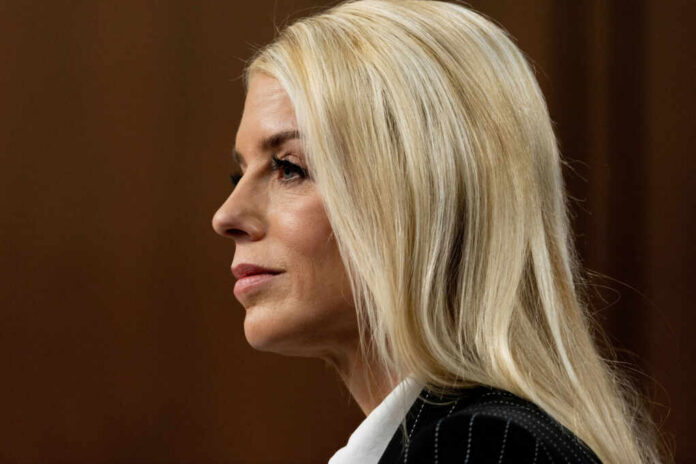
Attorney General Pam Bondi faced intense scrutiny from Congress over the Justice Department’s failure to release millions of Epstein files as required by law, refusing to directly address survivors seated behind her while Democrats accused the administration of orchestrating a “massive cover-up.”
Story Snapshot
- Justice Department released only 3 million of 6 million court-ordered Epstein documents, missing statutory deadlines
- Every Epstein survivor present confirmed they had been denied meetings with DOJ leadership to share their stories
- Bondi characterized congressional request for direct victim apology as “theatrics” despite survivors’ physical presence
- Bipartisan lawmakers criticized extensive redactions and removal of previously public 2019 prosecution memo from DOJ records
Congressional Confrontation Exposes Document Shortfall
Attorney General Pam Bondi testified before the House Judiciary Committee Wednesday regarding the Justice Department’s handling of Jeffrey Epstein files mandated for release under the Epstein Files Transparency Act. Congress ordered disclosure of 6 million documents, yet the department has produced only 3 million pages, claiming the remainder consists of duplicative materials. This justification contradicts evidence showing unreleased victim statement memos and the department’s removal of its 2019 prosecution memo from public access. The discrepancy raises serious questions about institutional transparency and compliance with congressional mandates designed to expose the full scope of Epstein’s trafficking operation.
Survivors Denied Justice Department Engagement
Epstein survivors attended the hearing wearing all-white outfits as symbolic testimony to their continued pursuit of truth. When asked if they had been unable to meet with the Justice Department to share their stories, every survivor present raised their hand, demonstrating zero institutional engagement with those most affected by Epstein’s crimes. Representative Pramila Jayapal demanded Bondi turn around and apologize directly to survivors seated behind her. Bondi refused, characterizing the request as “theatrics” while offering only a general apology facing forward toward lawmakers. This response underscores a troubling disconnect between stated commitments to victim advocacy and actual institutional accountability to those harmed by Epstein’s global sex trafficking ring.
Pattern of Broken Transparency Promises
Bondi previously told Fox News that Epstein materials were “on my desk right now to review,” suggesting imminent disclosure. However, she reversed course in July, announcing no files would be released despite congressional legislation compelling near-total transparency. The administration has repeatedly missed statutory deadlines while maintaining broad redactions that bipartisan lawmakers condemned as overly expansive and harmful to victim privacy rather than protective of it. Representative Jamie Raskin accused the department of conducting an “Epstein cover-up,” questioning whether institutional protection has superseded victim justice. These delays and reversals erode public confidence in government accountability, particularly when survivors demonstrably lack access to officials managing their cases.
Broader Context of Institutional Resistance
Bondi defended the Justice Department’s approach, stating she has “spent my entire career fighting for victims” and maintained the department did its “very best in the time frame allotted.” She also criticized what she termed “coordinated judicial opposition,” noting the Trump administration faces 627 lawsuits since taking office. Representative Jim Jordan praised Bondi for returning DOJ to “core missions” and ending “lawfare,” reflecting partisan divisions over the department’s priorities. However, the bipartisan nature of Epstein files criticism suggests legitimate concerns about statutory compliance transcend political allegiance. The question remains whether victims of Epstein’s crimes will receive the full transparency Congress mandated or continue facing institutional barriers to truth and accountability from federal law enforcement.
Sources:
CBS News: Attorney General Pam Bondi Testifies Before House Judiciary Committee
Politico: Democrats Challenge Bondi on Epstein Files