NASA’s Artemis II mission enters a critical pre-launch phase as America prepares to send astronauts beyond Earth orbit for the first time since 1972.
Story Highlights
- Four astronauts will fly around the Moon on 10-day test mission before any lunar landing attempt
- NASA targets January 17 for rocket rollout to Launch Pad 39B with specific launch windows through April 2026
- Mission validates critical systems after Artemis I revealed heat shield issues requiring safety analysis
- Success enables Artemis III lunar landing mission, restoring American leadership in human space exploration
Final Launch Preparations Begin
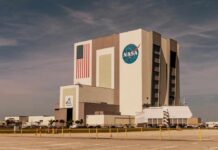
NASA teams are conducting final vehicle integration and testing of the Space Launch System rocket and Orion spacecraft at Kennedy Space Center’s Vehicle Assembly Building. The agency targets no earlier than January 17 to begin the 12-hour rollout of the fully stacked 322-foot rocket to Launch Pad 39B, traveling four miles on Crawler-Transporter-2. This marks the culmination of years of hardware development by Boeing, Lockheed Martin, and Northrop Grumman following the successful uncrewed Artemis I mission in November 2022.
Watch:
Countdown Simulations Validate Launch Readiness
Launch teams will perform two integrated countdown rehearsals once the rocket reaches the pad, testing operations down to T-1:30 before holding and resuming to T-0:33 when automatic launch sequencer would assume control. Teams then recycle to T-10 minutes for a second full countdown rehearsal to T-0:30, ensuring all systems function properly for the four-person crew. These rehearsals represent the final validation before NASA commits to launching humans beyond low Earth orbit for the first time in over 50 years.
Strategic Launch Windows Through April 2026
NASA has defined specific launch periods constrained by lunar trajectory requirements, lighting conditions for launch and reentry, and Orion’s splashdown parameters. Early 2026 opportunities include February 6-11, March 6-11, and April 1-6, providing multiple chances for mission success. This detailed planning reflects lessons learned from Artemis I, where unexpected heat shield charring patterns required additional analysis before flying crew. The mission will test life support, guidance, and reentry systems crucial for the subsequent Artemis III lunar landing.
Final Steps Underway for NASA’s First Crewed Artemis Moon Mission#NASA #Artemishttps://t.co/9idw2jdMUA
— News From Non Aligned World (@NonAlignedWorld) January 10, 2026
Restoring American Space Leadership
Artemis II represents America’s return to deep space exploration after relying on Russian Soyuz vehicles for crew transportation during the Space Shuttle retirement era. The mission validates NASA’s Space Launch System as the world’s most powerful operational rocket, capable of sending crews to the Moon without depending on foreign partners. Success positions the United States to achieve the first crewed lunar landing since Apollo 17 in 1972, demonstrating technological superiority over China’s growing space ambitions and restoring confidence in American engineering excellence.
With Boeing, Lockheed Martin, and international partners delivering critical hardware on schedule, Artemis II showcases the strength of American aerospace industry partnerships. The mission’s success will validate investments in domestic space capabilities while proving that properly managed government programs can achieve extraordinary technological milestones when focused on clear objectives and national priorities.
Sources:
Artemis III Mission: NASA & SpaceX Lunar Landing 2026
NASA Moon Mission: Artemis Program Launch Date
Final Steps Underway for NASA’s First Crewed Artemis Moon Mission
NASA Shares Progress Toward Early Artemis Moon Missions with Crew
Artemis III Mission