A formal federal election-law complaint is accusing Colorado’s top elections office of running a voter-roll system so sloppy and insecure that it could jeopardize confidence in 2026 results.
Quick Take
- A notarized Help America Vote Act (HAVA) complaint targets Colorado Secretary of State Jena Griswold over the statewide computerized voter registration list.
- The filing alleges Colorado failed to maintain accuracy, security, and audit safeguards required under HAVA Title III, despite receiving more than $43.4 million in federal funds.
- The complaint points to hundreds of thousands of voter-record changes after the 2020 election was certified, raising questions about transparency and required safeguards.
- Colorado’s published HAVA complaint process gives the Secretary of State a central role in resolving complaints within 90 days, creating concerns about impartial oversight when the office itself is accused.
What the HAVA complaint alleges about Colorado’s voter rolls
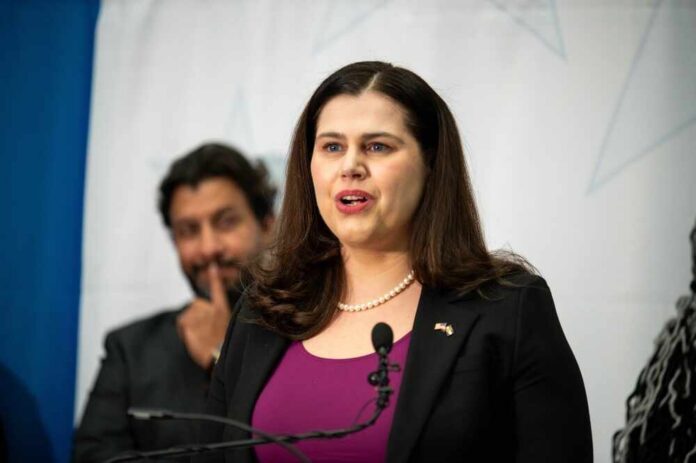
Colorado resident Michael Cahoon filed a sworn, notarized complaint under the Help America Vote Act against Secretary of State Jena Griswold, alleging multiple violations tied to Colorado’s statewide computerized voter registration list. The claims focus on whether the state maintains accurate voter records, prevents improper removals, and uses adequate technological security and audit capacity. The filing also argues Colorado has not updated its state HAVA plan since 2008 despite major election-law changes and significant federal funding.
At the center of the dispute is HAVA’s requirement that states use a single, official, computerized statewide voter-registration list with safeguards designed to prevent erroneous removals and support verification and auditing. Cahoon’s complaint argues Colorado’s procedures and recordkeeping fall short of those standards. Because these requirements are technical by design—spanning list management, access controls, and audit trails—the most important near-term development is whether the state can document what changed, who changed it, and why, using verifiable records.
Why post-certification record changes are drawing scrutiny
The complaint and subsequent reporting point to large volumes of voter-record changes occurring after elections were certified, including 328,895 changes after the 2020 general election certification, with additional commentary citing nearly 500,000 changes after elections were certified. The recent coverage does not establish what each change represented—routine maintenance, corrections, removals, or other edits—so the raw totals alone do not prove misconduct. Still, the scale raises legitimate questions about whether legally required safeguards and documentation were followed.
The concern for many voters is less about normal list maintenance—which every state must do—and more about timing and transparency. Federal election law has guardrails around removals and list maintenance, and the complaint argues the public has not been given clear proof that required notice, waiting periods, and protections against erroneous removals were applied consistently. Without detailed, publicly reviewable explanations and audit trails, large post-certification edits can erode confidence, even if some changes are ultimately shown to be routine.
The process problem: the accused office also manages the complaint track
Colorado’s posted HAVA complaint process describes a structured path for sworn complaints and outlines a 90-day timeline for resolution, with potential hearings. That process matters here because the complaint targets the Secretary of State’s own administration of elections. It highlights the inherent tension: an office accused of violating federal election-administration rules may still be positioned as the primary gatekeeper for investigating and resolving the claim. The complaint seeks an independent hearing officer to reduce perceived conflicts.
For conservatives who watched years of “trust the process” messaging collide with rising skepticism about election administration nationwide, this procedural setup is a practical concern, not a partisan talking point. Due process and transparent documentation are the real safeguards. If Colorado can produce a complete record showing compliant list maintenance, it should do so quickly and clearly. If the state cannot, the complaint process should still produce findings that are specific, testable, and open to review.
Where the money and the outdated plan claims could lead next
The complaint argues Colorado received more than $43.4 million connected to HAVA obligations and contends the state has operated under a plan last updated in 2008 while election laws changed later, including legislation cited from 2013. What the complaint does do is place the state’s documentation, planning updates, and compliance proofs squarely under a federal-law lens at a politically sensitive moment.
free TINA! HUGE: Explosive HAVA Complaint Filed Against Colorado Secretary of State https://t.co/IqA6ZIVSdm
— Debra Dosch (@DebraDosch) March 6, 2026
With the 2026 cycle approaching, the practical outcome to watch is whether the investigation produces concrete, verifiable answers: whether Colorado’s statewide list is truly the single official system, whether robust audit trails exist for the disputed post-certification changes, and whether safeguards against erroneous removals were followed. Those gaps make transparent documentation even more important.
Sources:
HAVA Complaint Document (Calameo)
Colorado Secretary of State: HAVA Complaint Process
Feds have lost credibility in elections after FBI call, Colorado secretary of state says
HUGE: Explosive HAVA Complaint Filed Against Colorado Secretary of State
Why did nearly 500,000 Colorado voter records change after elections were certified?
Colorado Department of State Strategic Plan (FY25-26) (PDF)