

President Trump’s bold executive order to end automatic birthright citizenship for children of illegal immigrants faces a pivotal Supreme Court showdown that could secure America’s borders and restore constitutional integrity.
Story Highlights
- Trump signed Executive Order 14156 on January 20, 2025, targeting births after February 19, 2025, to parents lacking U.S. citizenship or permanent residency.
- Courts issued nationwide injunctions after lawsuits from ACLU and NAACP LDF, but Supreme Court granted review in the Barbara case on December 5, 2025.
- Oral arguments set for spring 2026, with a ruling expected by summer, potentially upholding an originalist view of the 14th Amendment.
- The order counters birth tourism and irregular migration incentives, aligning with conservative demands for limited government and secure sovereignty.
Trump Takes Decisive Action on Day One
President Donald Trump signed Executive Order 14156 on January 20, 2025, his first day of the second term. The order ends birthright citizenship for children born in the U.S. to undocumented parents or those on temporary visas like tourists, students, or workers. It requires at least one parent to hold U.S. citizenship or lawful permanent resident status. This targets approximately 4-5% of annual U.S. births, framing automatic citizenship as a magnet for illegal immigration. Unlike the 2018 memorandum, this formal order applies to births after February 19, 2025.
Courts Block Implementation Amid Legal Battles
Federal courts immediately enjoined the order following lawsuits from the ACLU, NAACP Legal Defense Fund, Asian Law Caucus, and American Immigration Council. These groups claim it violates 125 years of precedent, including the 1898 Supreme Court decision in United States v. Wong Kim Ark. Lower courts ruled it unconstitutional, issuing nationwide stays that prevent enforcement. The Trump administration petitioned the Supreme Court for review in September 2025. This standoff highlights tensions between executive action on immigration and judicial interpretations of the 14th Amendment.
Supreme Court Steps In: Path to Resolution
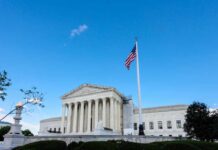
On December 5, 2025, the Supreme Court granted certiorari in the consolidated Barbara case, drawing from lower rulings like Washington. Oral arguments are scheduled for spring 2026, likely April 1, with a decision expected in June or July. USCIS issued guidance outlining enforcement if upheld, such as requiring parental status documentation at birth. Amicus briefs, including one from former Attorney General Edwin Meese, defend the order’s originalist reading of the 14th Amendment’s “subject to the jurisdiction thereof” clause.
Meese argues this aligns with the amendment’s post-Dred Scott intent, excluding those not fully under U.S. jurisdiction like undocumented entrants. Critics from civil rights groups call it executive overreach, but supporters see it restoring meaning to citizenship earned through legal channels, not exploited via border crossings.
Originalism vs. Precedent: Core Constitutional Debate
The 14th Amendment, ratified in 1868, aimed to overturn Dred Scott by granting citizenship to those born in the U.S. and subject to its jurisdiction. Wong Kim Ark affirmed this for children of legal non-citizen immigrants, excluding diplomats. Trump’s order interprets “jurisdiction” narrowly to bar children of undocumented or temporary visa holders, echoing failed 1990s legislative efforts. This originalist approach counters decades of policy that conservatives argue incentivize illegal entry and chain migration, undermining family values and national sovereignty.
If upheld, the order would shift citizenship proof from birth certificates to parental status or ancestry records, impacting roughly 300,000 births yearly. Families could lose access to passports, Social Security numbers, and benefits like CHIP or Medicaid. Hospitals might verify immigration status, easing state burdens from fiscal mismanagement under prior open-border policies. Long-term, it fuels debates on amendments while bolstering border security in Trump’s immigration crackdown.
Stakeholders and Broader Impacts
Key players include President Trump pushing unilateral reform, Supreme Court justices as final arbiters, and challengers leveraging injunctions. Conservative voices like Meese back the EO for limiting “birth tourism.” Opponents warn of a stateless underclass and family separations, but research shows no current enforcement due to stays. Economically, it reduces strains on healthcare and welfare from non-citizen births. Socially, it prioritizes American families over globalist incentives, aligning with values of limited government and self-reliance. As of early 2026, the nation awaits SCOTUS clarity.
Sources:
Executive Order 14156: Protecting the Meaning and Value of American Citizenship
Know Your Rights: Trump’s Birthright Citizenship Executive Order
Supreme Court will hear birthright citizenship case on April 1
Supreme Court to Review Constitutionality of Birthright Citizenship in 2025-26 Term
Know Your Rights: Birthright Citizenship
A guide to some of the briefs in support of ending birthright citizenship
Protecting the Meaning and Value of American Citizenship
Birthright Citizenship Under the U.S. Constitution