As Iranian streets erupt against a brutal theocratic regime, President Trump has drawn a bright red line that could reset how America confronts tyrants who gun down their own people.
Story Snapshot
- Nationwide Iranian protests have become the most serious challenge to the Islamic Republic in years, met with lethal force and internet blackouts.
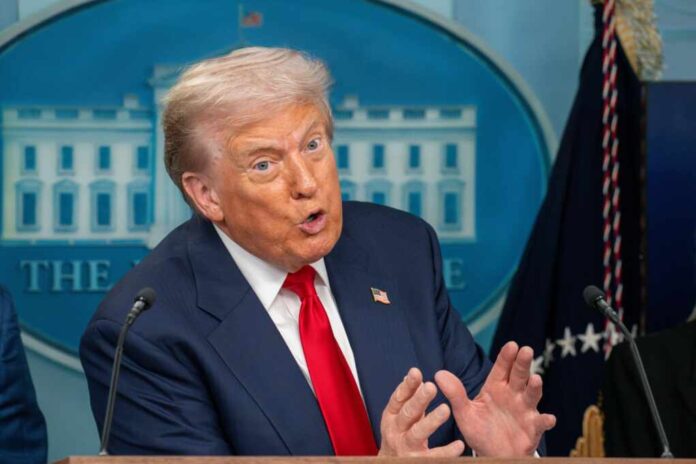
- President Trump has warned Tehran that if the regime “starts killing people,” the United States is prepared to “hit them very, very hard where it hurts.”
- Trump’s vow that America “stands ready to help” protesters marks a sharp break from past U.S. administrations’ reluctance to tie human-rights abuses to possible military action.
- Iran’s rulers are branding protesters “terrorists” and “enemies of God,” signaling harsher repression while blaming the unrest on the United States and exiled opposition.
Trump’s Warning and a Nation on the Brink
Nationwide demonstrations that began with anger over Iran’s collapsing economy have quickly evolved into a direct, open challenge to the Islamic Republic’s grip on power. Crowds have poured into streets from Tehran to smaller cities, blocking major roads, attacking governor’s offices, and tearing down regime symbols while calling for fundamental political change. Security forces have responded with live ammunition and pellet fire at close range, leaving well over a hundred protesters dead, even as the regime insists that “peace” has returned.
As the death toll mounted and a near-total internet blackout descended on Iran, President Trump escalated his public stance, warning Tehran’s rulers that if they “start killing people” as they have in past uprisings, the United States will “start shooting too.” He has promised to “hit them very, very hard where it hurts,” while stressing he is not talking about “boots on the ground” but about punishing strikes that directly target the regime’s tools of repression and regional aggression.
Watch:
How This Breaks With the Old Washington Playbook
Previous U.S. administrations, including both Republican and Democrat, typically confined themselves to statements of solidarity when Iranians rose up against the regime. During the 2009 Green Movement, the 2017–18 unrest, the 2019 fuel protests, and the 2022 Mahsa Amini uprising, Washington voiced support but stopped short of threatening force over Tehran’s internal crackdowns. Trump’s current posture is different: he is openly tying the regime’s treatment of its own people to potential U.S. military action, a precedent foreign-policy experts describe as largely unprecedented.
Iran’s Theocrats Double Down on Repression
Inside Iran, the power struggle is brutally one-sided for now. Supreme Leader Ali Khamenei, the ultimate authority in the system, has denounced protesters as tools of the United States, accusing them of “ruining their own streets” to please President Trump. Demonstrators have continued to challenge the regime’s authority, reportedly attempting to seize local government facilities and burn images of regime leaders in multiple cities. Exiled Crown Prince Reza Pahlavi, speaking from abroad, has urged protesters to “prepare to seize and hold city centers” and has suggested his own return to Iran may be close. Human-rights groups, struggling to piece together events through contacts under blackout conditions, say at least 116 protesters have been killed so far, including children, and warn the real total could be higher.
What It Means for Americans Watching From Home
For many in Trump’s conservative base, especially those who lived through decades of failed “engagement” with dictators, the images from Iran cut in two directions. On one hand, they see ordinary people risking everything for basic freedoms that Americans often take for granted: the right to speak out, worship freely, and resist authoritarian control. On the other, they recall how globalist-minded elites once sent pallets of cash to Tehran, eased sanctions, and treated the same regime as a respectable negotiating partner while it crushed dissent.
Trump’s message that “Iran is looking at FREEDOM, perhaps like never before. The USA stands ready to help!!!” speaks directly to that frustration. It suggests that American power, when used carefully, can still stand on the side of people fighting tyranny rather than appeasing those who run police states. The coming weeks will test whether tough talk from Washington can deter further bloodshed or whether Iran’s rulers will hide behind blackout conditions and a familiar script of blaming the West while tightening their grip at home.
Sources:
Iran International coverage of Trump’s warning and Iran’s escalating crackdown
CBS News report on Iranian protests, death toll, and Trump’s threats
Council on Foreign Relations expert brief on Iran’s protests and Trump’s threats
Institute for the Study of War update on Iran protests and regime response