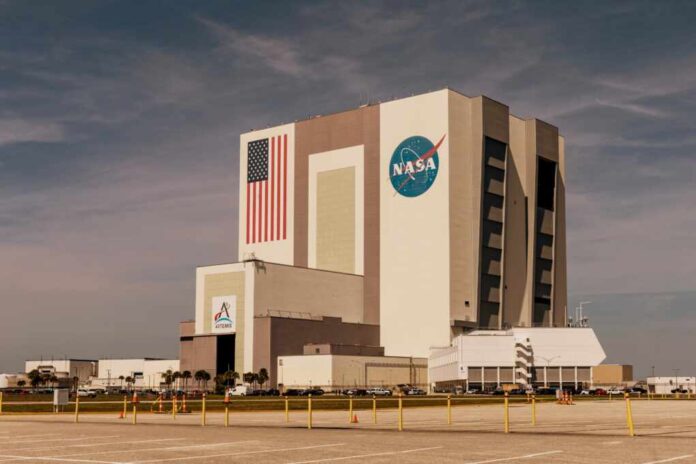
NASA has just announced the selection of industry proposals to advance America’s first dedicated mission to search for extraterrestrial life.
Story Overview
- NASA selects industry proposals for Habitable Worlds Observatory, America’s first mission explicitly designed to search for signs of life on exoplanets
- The Strategic Astrophysics Technology program will mature critical technologies for direct imaging and spectroscopy of potentially habitable worlds
- Mission represents major advancement in American space leadership and technological superiority over foreign competitors
- Technology development promises dual-use applications for Earth sustainability and national security capabilities
America’s First Dedicated Life-Search Mission Takes Shape
NASA announced Monday the selection of industry proposals to develop technologies for the Habitable Worlds Observatory concept, representing a watershed moment in American space exploration. Unlike previous missions that searched for life as secondary objectives, HWO stands as America’s first mission explicitly designed to detect signs of life on habitable exoplanets. This bold initiative positions the United States at the forefront of what could become humanity’s most significant scientific discovery.
The selected proposals will advance critical technologies through NASA’s Strategic Astrophysics Technology program under the Research Opportunities in Space and Earth Sciences framework. Industry partners will now develop prototype systems for direct imaging and spectroscopy capabilities essential for analyzing distant worlds. This public-private partnership approach demonstrates how American innovation thrives when government focuses on its core missions while empowering private enterprise to deliver results.
NASA Selects Tech Proposals to Advance Search-for-Life Mission via NASA https://t.co/G67AVB2kjj
— Nick Kromer (@NickKromer) January 5, 2026
Technology Development Strengthens National Competitiveness
The Habitable Worlds Observatory initiative builds upon decades of American space exploration managed by centers like JPL, which has successfully flown spacecraft to all planets and the Sun. This accumulated expertise provides the operational backbone for HWO’s ambitious goals. The mission leverages NASA’s Cosmic Origins program, which emphasizes strategic technology development for future flagship missions, ensuring America maintains its edge in space-based scientific capabilities.
Recent solicitations through programs like SpaceTech-REDDI-2026 demonstrate systematic investment in breakthrough technologies. These efforts complement ground-based research supported by agencies like NSF, creating a comprehensive ecosystem for astronomical advancement. The coordinated approach ensures American researchers and companies lead global efforts in exoplanet detection and analysis, protecting our technological advantages from foreign competitors seeking to challenge American space dominance.
Economic and Strategic Benefits Beyond Space Exploration
The HWO technology development promises significant dual-use applications extending far beyond space science. Astrobiology research has already contributed insights applicable to Earth sustainability challenges, including carbon capture technologies and biotechnology innovations. These applications demonstrate how strategic space investments deliver practical benefits for American industry and environmental stewardship, creating jobs and economic growth while advancing scientific knowledge.
Watch;
The mission timeline aligns with ongoing JPL operations and Deep Space Network capabilities, ensuring efficient resource utilization. As industry partners develop HWO technologies, the economic impact will ripple through aerospace contractors and technology suppliers nationwide. This investment approach exemplifies sound fiscal policy – targeted government spending that leverages private sector innovation to deliver both scientific breakthroughs and economic returns for American taxpayers.
Sources:
SpaceTech-REDDI-2026 Solicitation – SAM.gov
NASA Jet Propulsion Laboratory
NASA Cosmic Origins Program Opportunities
Searching for Extraterrestrial Life Advances Terrestrial Sustainability