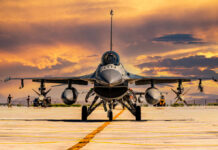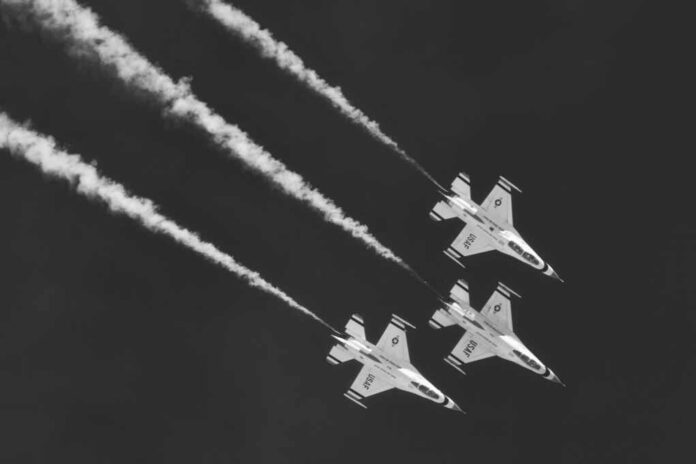
A U.S. Air Force Thunderbird F-16 fighter jet crashed in California’s Mojave Desert, creating a massive plume of black smoke but ending with the pilot’s successful ejection.
Story Snapshot
- Air Force Thunderbirds F-16 crashed in California’s Mojave Desert with pilot safely ejecting
- Aircraft loss represents significant financial cost during period of military budget scrutiny
- Investigation underway to determine cause of premier demonstration team aircraft failure
- Incident highlights both aviation risks and effectiveness of military safety systems
Thunderbird F-16 Goes Down in Desert
An F-16 Fighting Falcon belonging to the United States Air Force Thunderbirds demonstration team crashed in central California’s Mojave Desert, generating a dramatic fire and massive black smoke plume visible from considerable distance. The pilot successfully ejected from the aircraft before impact, avoiding what could have been a tragic loss of life. The incident occurred in the remote desert region near Death Valley, an area historically used for military aviation operations due to its vast open spaces and established military infrastructure.
A U.S. Air Force F-16C Fighting Falcon from the Thunderbirds demonstration team crashed near Trona Airport — in the desert south of Death Valley — during a training mission; the pilot ejected safely and was hospitalized with minor injuries.https://t.co/RWRN2dnyk1
— Mark Bowron (@MarkBowron420) December 4, 2025
Investigation Launched Into Aircraft Loss
The Air Force has initiated a comprehensive investigation to determine the cause of the F-16 crash, examining multiple factors including potential mechanical failure, maintenance records, weather conditions, and operational circumstances. The Thunderbirds represent the Air Force’s premier aerial demonstration team, showcasing military aviation capabilities to the public through precision flying demonstrations performed for decades across the nation. This aircraft loss raises questions about maintenance protocols and operational safety measures for demonstration aircraft that perform high-stress maneuvers regularly.
Watch:
Financial Impact During Budget Constraints
The loss of an F-16 Fighting Falcon represents a significant financial blow, with each aircraft costing tens of millions of dollars when accounting for procurement, upgrades, and operational modifications. This incident comes at a time when military spending faces increased scrutiny and demands for fiscal responsibility from taxpayers frustrated with government waste. The crash may prompt temporary operational restrictions for Thunderbirds flights pending investigation results, potentially affecting scheduled air shows and public demonstrations that serve recruitment and public relations purposes for the Air Force.
The successful pilot ejection demonstrates the effectiveness of military safety systems designed to protect our servicemembers, though the complete loss of the aircraft underscores the inherent risks in military aviation operations. Investigation findings will likely influence future maintenance protocols, training procedures, and operational guidelines to prevent similar incidents and protect both personnel and valuable military assets from preventable losses.
Sources:
Air Force Thunderbird crashes in California’s Mojave Desert