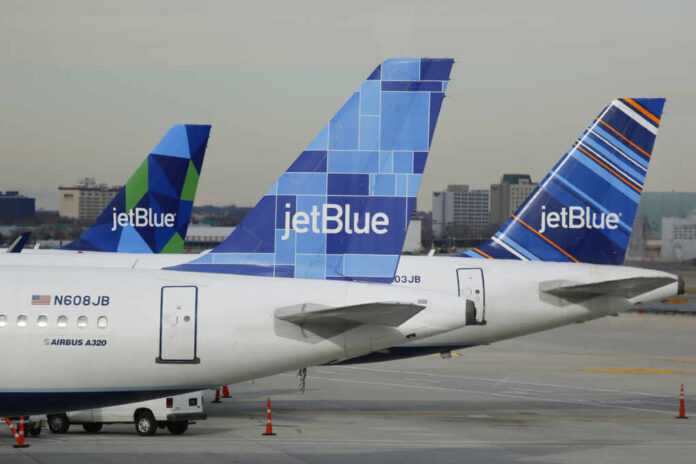
A JetBlue flight’s abrupt emergency landing after a sudden drop in altitude has renewed questions about airline safety standards.
Story Snapshot
- A JetBlue Airbus A320 from Cancun to Newark lost altitude suddenly, injuring several passengers.
- The pilot reported a flight control issue; the aircraft diverted to Tampa for an emergency landing.
- Investigations by JetBlue and the FAA are underway, with the aircraft grounded for inspection.
- The incident raises concerns about aviation oversight and the effectiveness of current safety protocols.
JetBlue Flight’s Sudden Emergency: What Happened in the Skies
On October 31, 2025, a JetBlue Airbus A320 en route from Cancun to Newark experienced a sudden and dramatic loss of altitude while cruising over U.S. airspace. Multiple passengers were injured during the incident, which occurred despite calm weather conditions and a flight crew following normal procedures. The pilot immediately reported a “flight control issue,” requested emergency medical assistance, and diverted to Tampa, Florida. Emergency personnel met the aircraft on arrival, transporting injured passengers to local hospitals for evaluation and treatment. This event has brought airline safety and regulatory oversight back into focus for American travelers.
JetBlue flight makes emergency landing after plane loses altitude, passengers injured https://t.co/55hp4Pe8ZY
— Sam Adams ~ #NotMeUs (@CapaTosta122) October 31, 2025
JetBlue quickly announced that the affected aircraft had been removed from service for a full inspection, and both the airline and the Federal Aviation Administration (FAA) have launched investigations. The FAA’s initial review centers on the aircraft’s advanced flight data recorders and cockpit voice recordings, which are crucial for determining whether a mechanical fault, pilot error, or unforeseen technical anomaly led to the sudden altitude loss. While the number of injured has varied in media reports—from three to as many as twenty—all sources agree that injuries were not life-threatening. The swift response by the crew and rescue teams likely prevented more serious outcomes, but the incident highlights vulnerabilities even in modern, well-equipped fleets.
Watch: JetBlue flight makes emergency landing after plane loses altitude, passengers injured
Aviation Safety Under Scrutiny: Policy and Oversight Challenges
This emergency landing has put a spotlight on the state of U.S. aviation safety and regulatory enforcement. The fact that a technologically advanced Airbus A320, operated by a major U.S. carrier, could suffer a severe in-flight emergency with no warning signs or adverse weather raises tough questions about current maintenance standards, pilot training, and the role of federal regulators.
Historically, the FAA and airlines like JetBlue have faced public scrutiny when in-flight anomalies, even rare ones, occur. Recent years saw policy debates over the balance between streamlining regulations and maintaining the highest possible safety standards.
Investigations and Accountability: What Comes Next
Both JetBlue and the FAA have pledged full transparency as their investigations progress. The aircraft remains grounded, with teams analyzing flight data and mechanical systems for signs of malfunction or error. JetBlue’s public statement emphasized its commitment to customer and crew safety, promising to support affected passengers and implement any necessary corrective actions.
This incident also underscores the importance of robust, constitutionally sound oversight in all sectors where American lives are at risk. True accountability means not just identifying what went wrong, but making sure it never happens again—and that government agencies serve the interests of the people, not corporate or ideological agendas.
Sources:
Flight Makes Emergency Landing, Several Injured After Plane Loses Altitude (NBC News via iHeart/FOX Sports)
JetBlue flight makes emergency landing after losing altitude (ABC News video coverage)